How Precast Creates Healthy Homes That Change Lives
“In many rural and Arctic Alaska communities, housing is not just inadequate—it is a direct contributor to chronic illness, energy insecurity, and displacement. Precast modular construction offers a fundamentally different approach: healthier indoor environments, lower lifetime costs, and resilience built for Arctic realities. This article explores why housing must be treated as a public health issue—and how precast can help change lives.”
HEALTH STARTS AT HOME
For many Alaskans, housing is not merely a question of comfort or convenience—it is a primary determinant of health. In rural and Arctic communities, the condition of the home often shapes respiratory health, immune function, energy security, and long-term wellbeing more than any single clinical intervention. When housing fails, the consequences are cumulative and inescapable.
Across much of rural Alaska, families live in structures that were never designed for Arctic conditions and have deteriorated under decades of moisture intrusion, heat loss, flooding, and ground instability. The result is living environments that actively undermine human health—exposing residents to chronic mold, persistent cold stress, and escalating economic strain. In these communities, housing is not a background issue. It is a daily, compounding risk factor that affects nearly every aspect of life.
THE HIDDEN HEALTH CRISIS IN ALASKAN HOUSING
In villages throughout Western and Northern Alaska, aging housing stock has become a quiet but persistent public health crisis. Many homes were built quickly, with limited materials, and never intended to withstand today’s climatic realities. As conditions worsen, the health impacts intensify.
Chronic Mold Exposure: Poorly sealed building envelopes, roof leaks, plumbing failures, and inadequate ventilation create ideal conditions for mold growth. In overcrowded homes, moisture has nowhere to go. Long-term mold exposure is linked to:
Asthma and chronic respiratory illness
Immune system dysregulation
Neurological symptoms, fatigue, and cognitive strain
Increased illness rates among children and elders
In communities with limited access to healthcare, these effects compound quietly over time.
Drafts, Heat Loss, and Cold Stress: Leaky walls, floors, and roofs create constant drafts and uneven indoor temperatures. Residents are forced to overheat some rooms simply to keep others livable, leading to:
Cold stress and disrupted sleep
Increased respiratory infections
Excessive fuel use and unsustainable heating costs
In Arctic regions, energy inefficiency is not just expensive—it is dangerous.
Flooding and Ground Instability: Permafrost thaw, coastal erosion, and seasonal flooding increasingly threaten housing foundations. Water intrusion beneath floors and into wall systems leads to:
Structural degradation
Mold and bacterial growth
Unsafe electrical and mechanical systems
For families living in these homes, each storm season brings renewed risk.
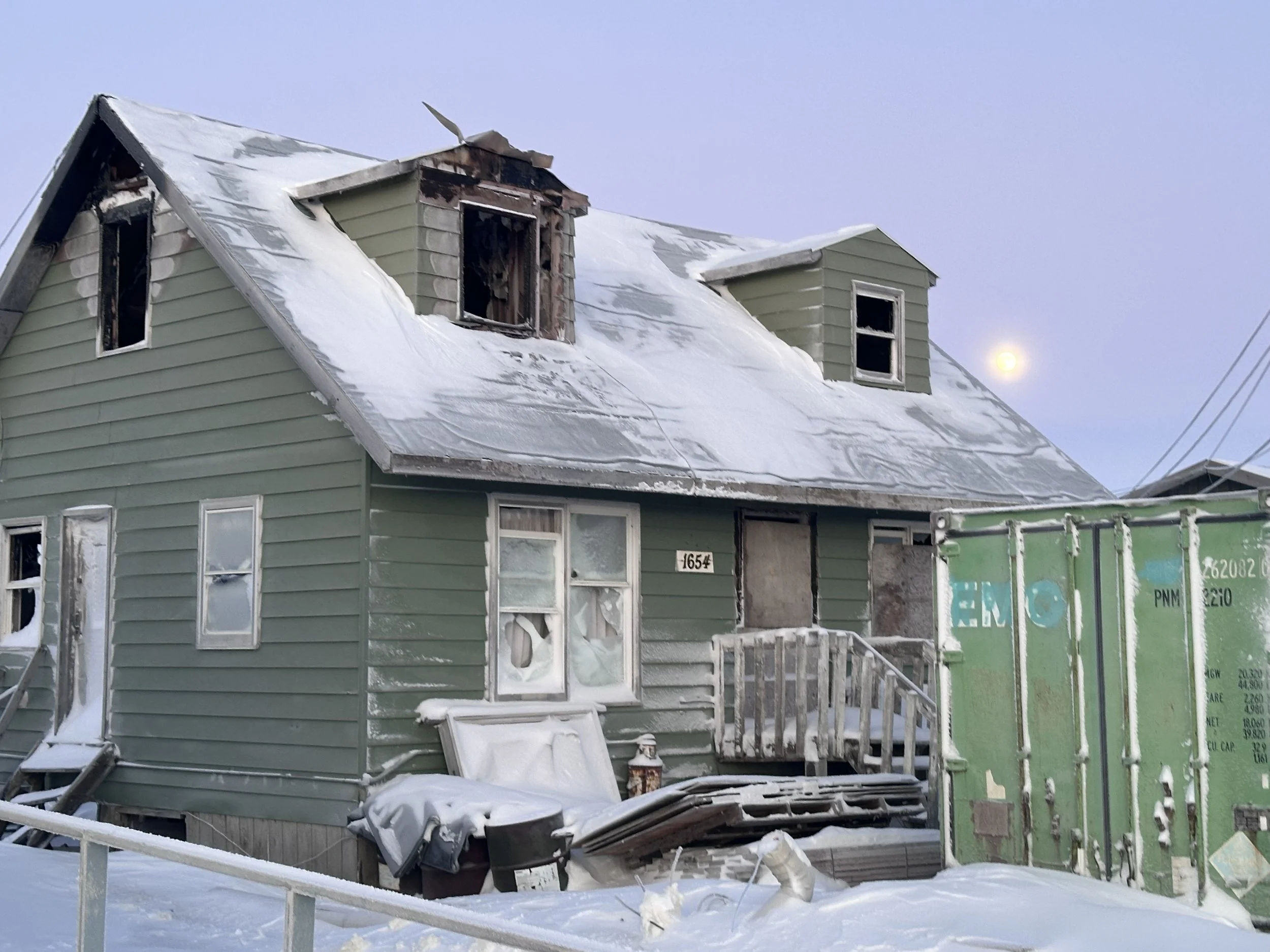
Deteriorating housing in Bethel, Alaska—structures never designed for Arctic conditions now expose residents to chronic cold stress, moisture intrusion, and serious health risks.
Why Precast Modular Construction Is a Health Intervention
Precast concrete construction is often discussed in terms of strength and speed. In rural Alaska, its most meaningful impact may be on human health.
Mold-Resistant by Design: Precast concrete does not rot, swell, or support mold growth. When combined with proper insulation, vapor control, and mechanical ventilation, precast homes dramatically reduce moisture-related health risks. Unlike wood-framed construction, precast does not degrade invisibly over time—supporting healthier indoor air quality year after year.
Airtight, Draft-Free Living Envelopes: Precast systems are manufactured to precise tolerances in controlled environments. This allows for:
Continuous insulation
Minimal thermal bridging
Exceptionally low air leakage
For residents, this means warmer, quieter, and more stable indoor conditions — especially critical for elders, children, and those with respiratory illness.
Flood- and Climate-Resilient Structures: Concrete precast structures are inherently more resistant to water exposure, ground movement, and extreme weather. In flood-prone or permafrost-affected regions, this durability reduces:
Emergency repairs
Forced displacement
Long-term health impacts from repeated environmental exposure
A home that survives Alaska’s climate is a home that protects its occupants.
ECONOMIC HEALTH IS COMMUNITY HEALTH
Housing-related illness carries enormous economic costs—many of them hidden.
Lower Energy Costs: Highly efficient precast homes require significantly less fuel to heat, easing the financial burden on families facing some of the highest energy costs in the nation. Predictable energy use also strengthens community-wide planning and infrastructure resilience.
Reduced Medical Burden: Healthier homes mean fewer respiratory illnesses, fewer missed school days, and fewer costly medical evacuations. Over time, this reduces strain on families, clinics, and regional health systems.
Long-Term Assets, Not Temporary Fixes: Precast homes are built for decades of service, not short-term survival. This creates lasting community assets—homes that can be maintained, adapted, and relied upon rather than repeatedly replaced.
BUILT FOR ALASKA. BUILT FOR PEOPLE.
Alaska Precast Solutions is developing Alaska’s first prestressed precast concrete manufacturing capacity to deliver housing systems designed specifically for the state’s climate, logistics, and communities.
By manufacturing in-state and designing for modular transport, precast housing can reach rural and Arctic villages more efficiently—reducing construction risk while improving long-term outcomes. This approach is not about imposing a one-size-fits-all solution. It is about offering a fundamentally healthier building system that can be adapted to local needs, cultural priorities, and future growth.
A HEALTHIER FUTURE STARTS WITH BETTER HOMES.
Housing in rural Alaska cannot be treated as a temporary logistics challenge. It is a public health imperative. Precast modular housing offers:
Cleaner indoor air
Warmer, drier living spaces
Greater resilience to climate change
Lower lifetime costs
Healthier lives for the people who call these places home
For communities that have endured decades of inadequate housing, the difference is not incremental—it is transformational.
At Alaska Precast Solutions, we believe strong communities start with strong homes. And strong homes start with building systems that respect Alaska’s realities—and the people who live here.
<< BACK TO BLOG