Rethinking Board Roads
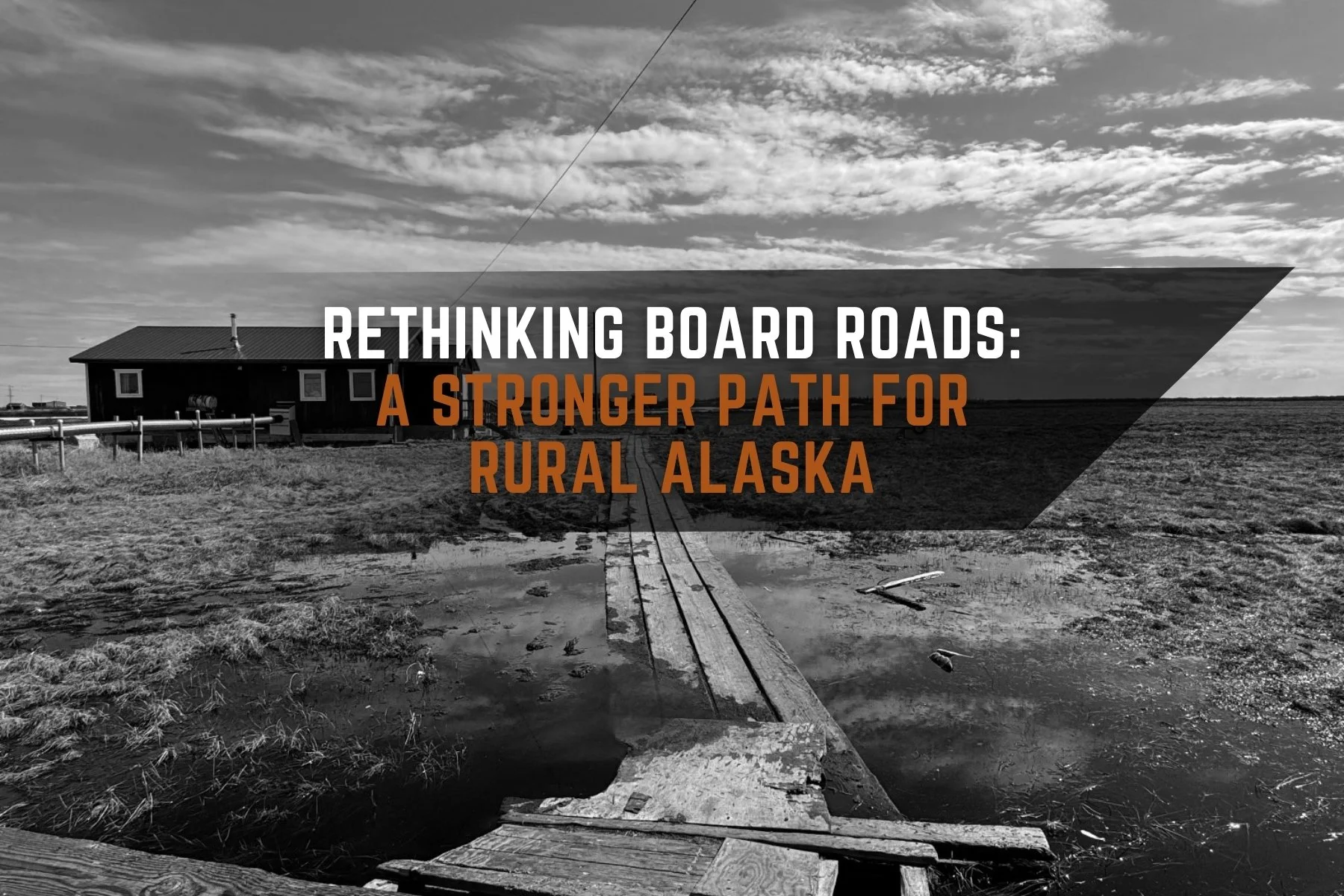
A Stronger Path for Rural Alaska
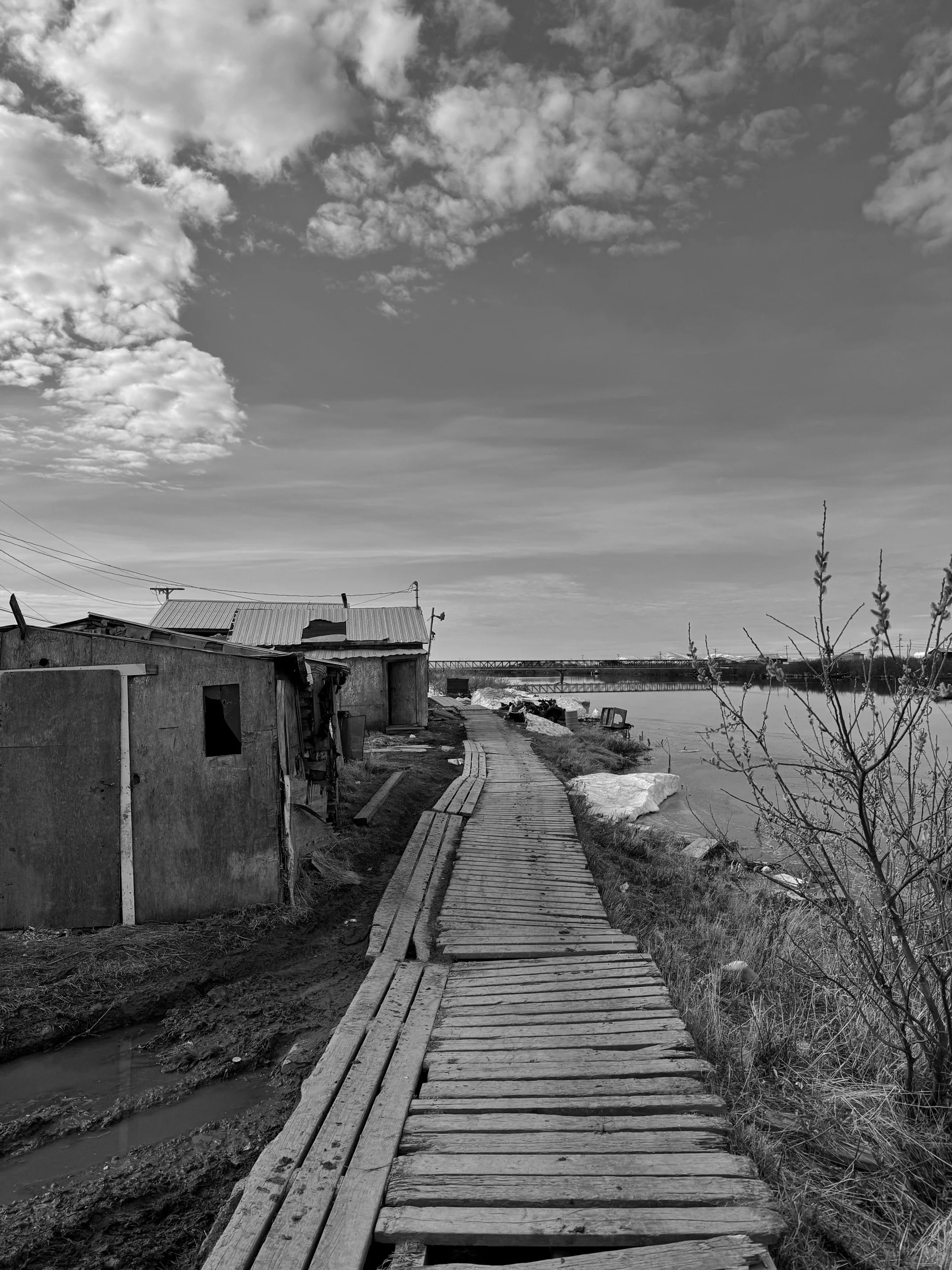
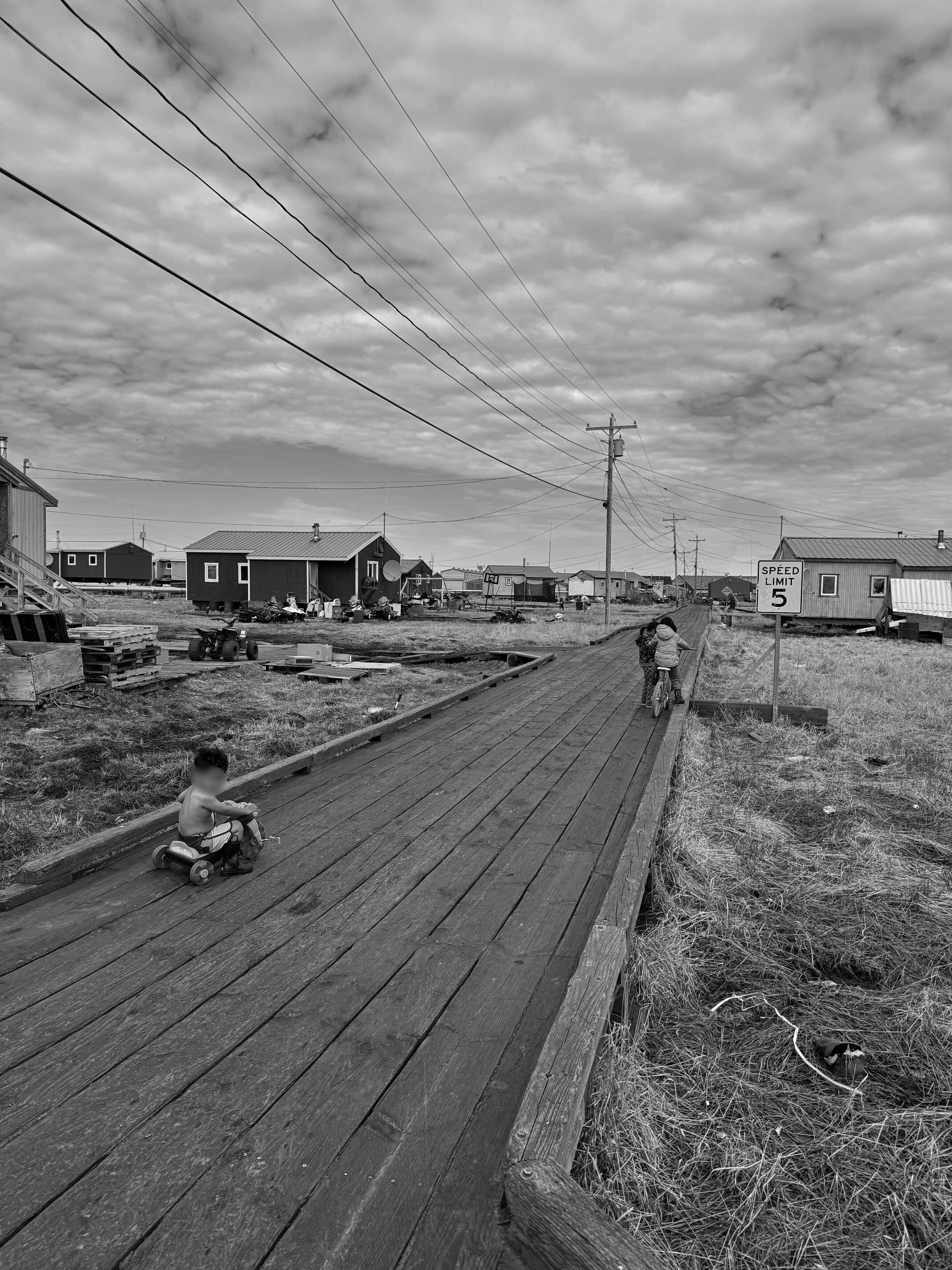
Across rural Alaska, board roads (boardwalks) are more than pedestrian paths. They are the backbone of daily life — carrying people, water & sewer lines, emergency response, and power across wetlands, permafrost, and soft tundra where traditional roads are impractical. But most existing systems share the same problem: they were built with materials that simply don’t last in Alaska’s environment.
Wood boardwalks deteriorate quickly under constant moisture, freeze–thaw cycles, and heavy use. Communities are forced into an ongoing cycle of repair and replacement that consumes funding, labor, and time — often with limited local resources to maintain them.
A new approach is here: precast concrete board road systems designed specifically for Alaska.
Why Board Roads Matter in Rural Alaska
Many rural communities are built on tundra, wetlands, or permafrost soils where conventional road construction would require extensive excavation or cause ground disturbance that destabilizes the terrain. Board roads solve this by elevating travel paths above the surface. They serve multiple purposes:
Primary pedestrian routes between homes, schools, clinics, and community buildings
Utility corridors for water, sewer, and electrical infrastructure
All-season access across saturated ground conditions
Critical community infrastructure in places where vehicles are limited
Essential access for emergency response — allowing medevac teams, fire crews, and first responders to reach homes safely and quickly
When these systems fail, daily life becomes harder and sometimes unsafe.
The Problem with Traditional Wooden Boardwalks
Most board roads in Alaska are built using timber decking supported by wood or steel framing. While relatively easy to construct, these systems face constant degradation. Common issues include:
Rot and structural weakening from moisture exposure
Freeze–thaw damage and fastener failure
Warping and uneven walking surfaces
Increasing maintenance costs over time
Frequent replacement cycles
Even well-funded projects eventually face the same reality: wood is temporary in Alaska’s climate. A striking example is the Selawik Boardwalk Project, a $16.1 million investment to replace and upgrade aging infrastructure. While necessary, projects like this highlight how costly it can be to continually rebuild systems made from short-lived materials.
A Durable Alternative:
Precast Concrete Board Roads
Precast concrete offers a fundamentally different solution. Instead of building board roads piece-by-piece with wod in the field, modular precast components are manufactured in a controlled facility and assembled quickly onsite. Key advantages include:
Exceptional Durability - Concrete resists moisture, rot, and freeze–thaw cycles far better than timber. Properly designed precast systems can last decades with minimal maintenance.
Rapid Installation - Precast components arrive ready to install. This significantly reduces construction time — a critical factor in Alaska’s short building seasons.
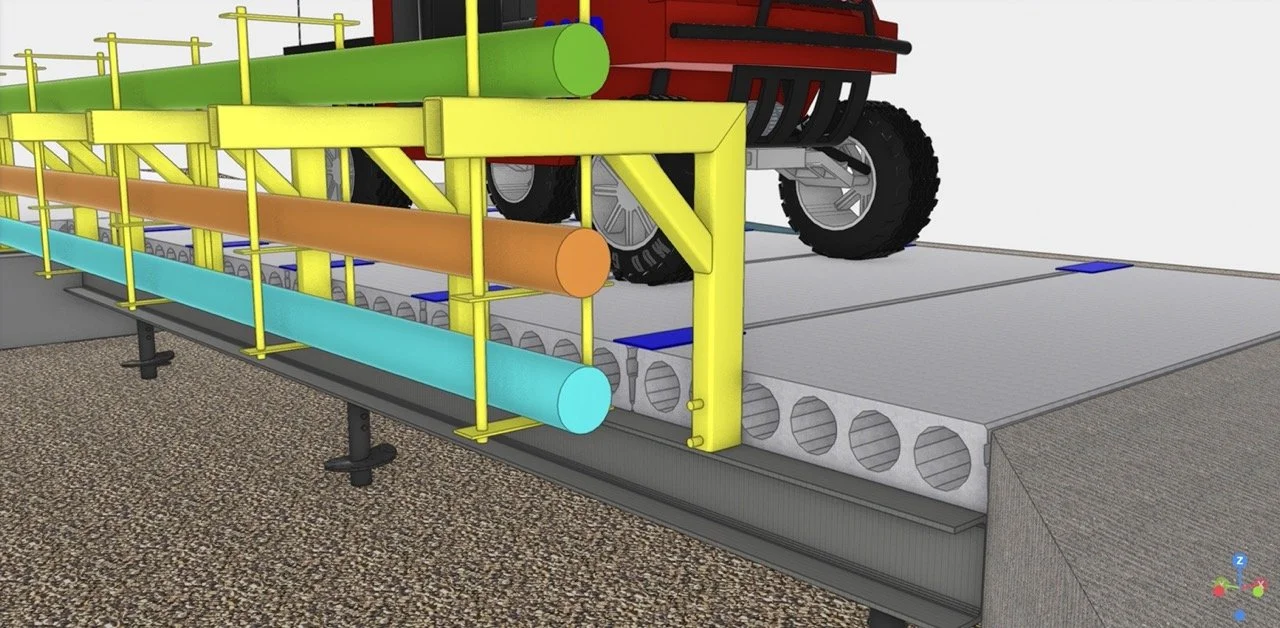
Structural Strength - Precast hollowcore slabs and support elements provide high load capacity, allowing systems to accommodate pedestrian traffic, small vehicles, and utility infrastructure.
Integrated Utility Corridors - Board roads often carry water, sewer, and electrical lines. Precast systems can incorporate built-in brackets and routing channels to safely support utilities while keeping them accessible for maintenance.
Consistent Quality - Factory-controlled production ensures uniform strength, durability, and precision that field-built timber systems cannot easily match.

A Modular System Designed for Rural Communities
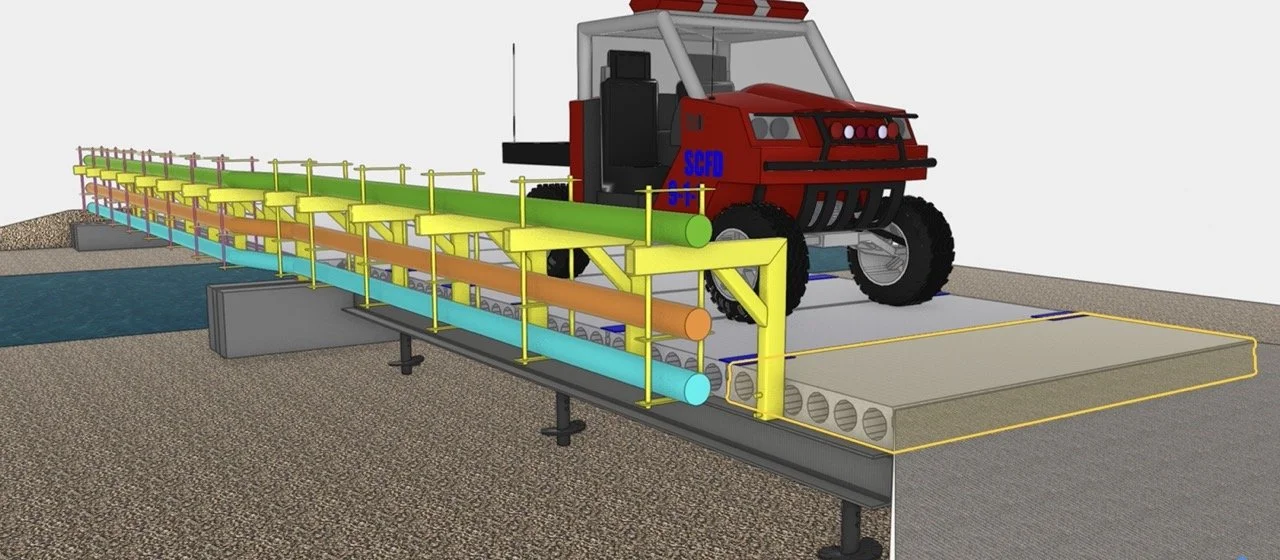
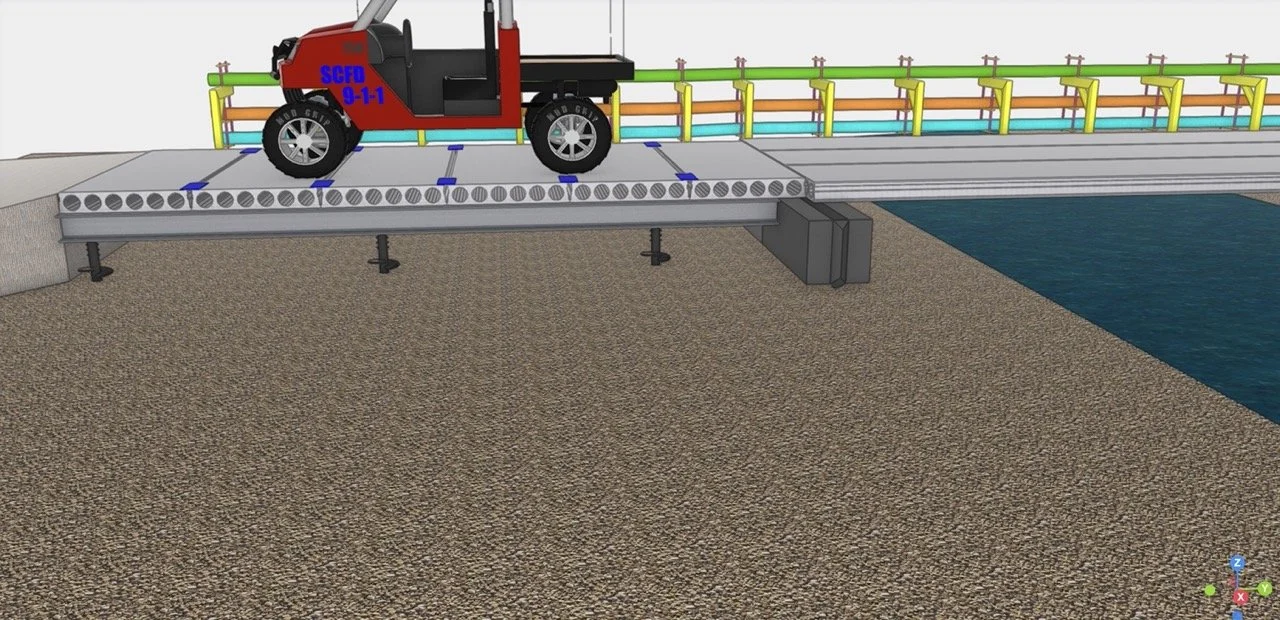
The concept under development uses precast concrete components designed for Alaska conditions. Typical elements include:
Precast hollowcore deck panels for long structural spans
Adjustable supports or pile foundations suited to tundra soils
Utility support brackets integrated along the boardwalk
Guardrails and safety features for pedestrian travel
Short-span bridge modules for drainage crossings
Working with Communities Across Alaska
Advancing better infrastructure solutions requires collaboration. Current initiatives include:
Partnership discussions with the Alaska Municipal League to explore long-term boardwalk solutions
Collaborative planning efforts in Kwigillingok and Kipnuk, where durable infrastructure is critically needed
Continued engagement with rural communities and regional organizations
The goal is not simply to replace old boardwalks — but to establish a long-term infrastructure standard that better fits Alaska’s environmental realities.
Infrastructure Built for Alaska
Board roads are essential infrastructure in many Alaska communities. Yet the materials traditionally used to build them were never designed for the harsh conditions they endure. Precast concrete board road systems offer a path forward — combining durability, rapid installation, and reduced lifecycle costs. By rethinking how these systems are built, Alaska has the opportunity to create infrastructure that lasts longer, requires less maintenance, and better serves rural communities for generations.